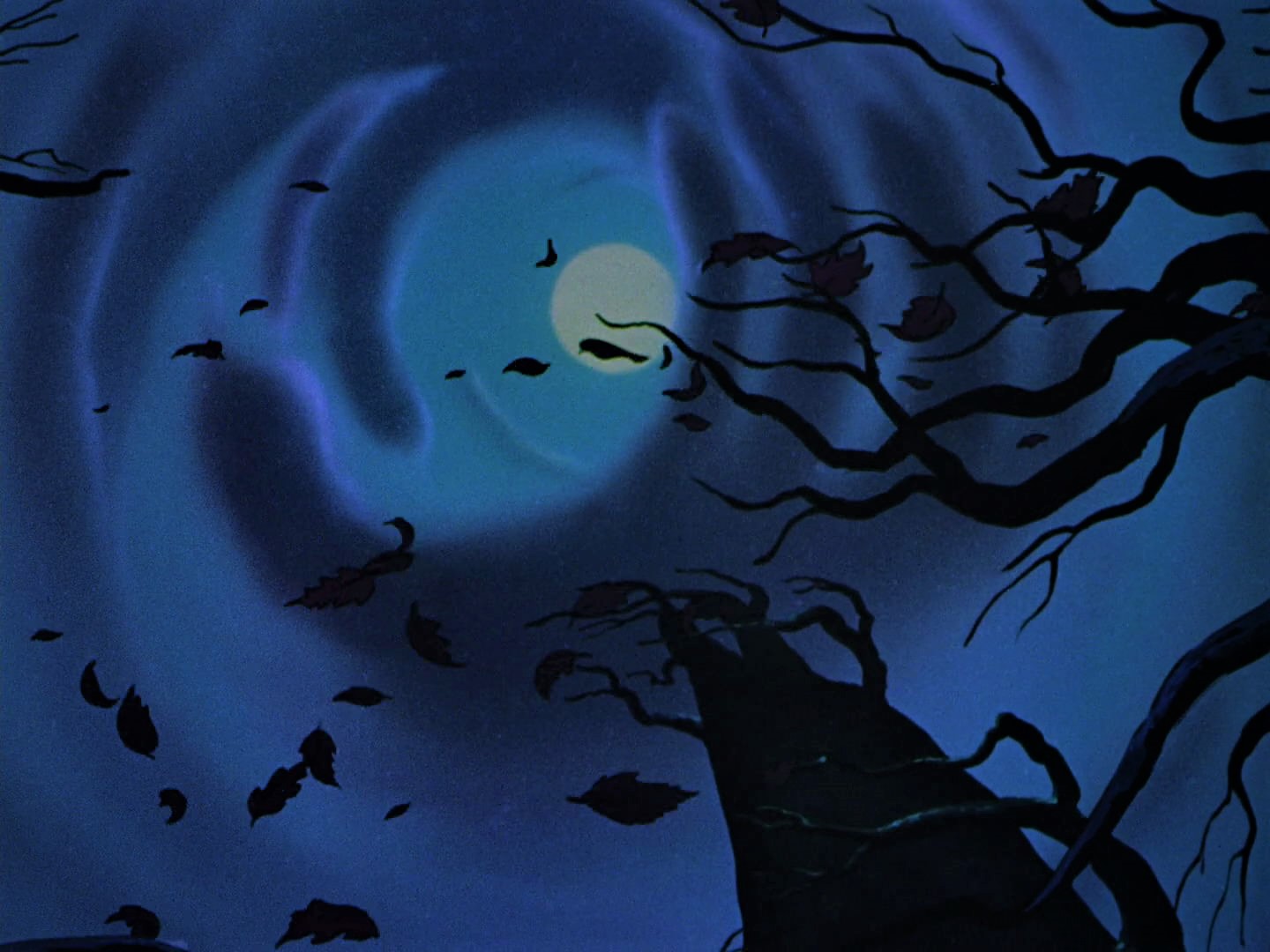
Friday, March 23, 2018

Dumbo

Well well - long time, no see.

Ladies and gentlemen, boys and girls, welcome to the big top! Step right up, as today we feature a look at a beloved little film focusing on a precocious pachyderm with enormous ears! We direct your attention to the center ring, for a frank (and frankly rambling) discussion of 1941’s Dumbo!

I think that shit just kicked in, Timothy...

In 1939 Kay Kamen, the head of Walt Disney Productions’ merchandise licensing (and the man responsible for bringing the Mickey Mouse watch to the world in 1933,) showed Walt Disney a prototype of a toy called a Roll-A-Book. A simple storytelling device similar to a panorama, the toy contained a little story told in 8 drawings of a big-eared baby circus elephant named Dumbo. Taken more with the story than the Roll-A-Book, Walt purchased the rights to the tale, which was written by Helen Aberson and illustrator Harold Pearl. At the same time, riding high off the success of 1937’s Snow White and the Seven Dwarfs, the studio had put most of that film’s profits back into the productions of Pinocchio, Fantasia, and Bambi. These films were complex, costly projects that took the artistic lessons learned from their first feature and expanded upon them, creating some of the finest achievements in the art of filmed animation. However, the closure of European box offices following the outbreak of what would become World War II meant that Pinocchio and Fantasia, both released in 1940, would not make back their high production costs. To recoup some of these losses (and help get Bambi finished for it’s 1942 release,) it was decided to upgrade their planned Dumbo short into a full-length, budget-minded feature - and to have it finished and out before the end of 1941.

The only work Hyacinth Hippo could get after Fantasia bombed...

While certainly not poorly made, Dumbo’s hastened production does show in the finished film - especially when compared to its lavishly-assembled siblings. The overall animation has a simplified, almost flat appearance - a more “cartoony” look, if you will. This design choice applies to nearly all elements of the film. The character designs look like they came straight from one of the studio’s Mickey Mouse cartoon shorts, lacking the shaded look of Pinocchio or the drawn-from-life movements of Snow White and her evil Queen. Even the length of the film reflects its hurried nature, as Dumbo clocks in at a tidy 64 minutes - nearly an hour shorter than its immediate predecessor, Fantasia (though it loses the award for Disney’s shortest feature to 1942’s slight Saludos Amigos.)

Change my pitch up - smack my bitch up...

Perhaps to make up for (or distract from) Dumbo’s budgetary restrictions, the filmmakers seemingly doubled-down on high emotion to carry the film. Viewers are instantly sympathetic to the little elephant with the oversized ears (how can we not be!?! Look at those blue eyes! Those giant ears on the cute wittle baby! #Adorbz!), and our blood boils when the haughty elephant matriarchs insult Dumbo and his poor mother, the nearly mute Mrs. Jumbo (cue the lecherous principle from Forrest Gump: “Is there a Mr. Jumbo, Mrs. Jumbo?”) Proceeding scenes of Dumbo getting his bath and playing with his mother overload the film with a severe case of cuteness, striking a particularly poignant chord with those who’ve raised young children. Within minutes of screentime, Mrs. Jumbo is in a red-eyed furor as she spanks the living crap out of a human kid who’s bullied her little calf, causing a riot to break out under the big top. Before you can catch your breath, Dumbo is crying outside his mother’s “Mad Elephant” cage as the sob-inducing “Baby Mine” croons over the soundtrack with gentle assertiveness. Meanwhile, comedy is supplied by a bumbling stork (Disney mainstay Sterling Holloway again,) a pompous ringleader (Herman Bing,) wacky “woikin’-stiff” clowns and Dumbo’s wise-cracking Jiminy Cricket-substitute, Timothy Mouse (Edward Brophy) - who doesn’t show up until nearly halfway through.

I'm not real enough for you, Billy?

That Dumbo makes an unabashed play at emotion isn’t a bad thing in and of itself - the best art is arguably that which appeals to emotion as much as reason, if not more so. But this roller coaster of drama, swinging wildly from histrionic melodrama to wacky comedy, is built upon such a miniscule storyline that it barely holds up. So much intensity is packed into Dumbo’s short running time that there’s little time to breathe and register everything going on. No doubt this came as a result of the story’s limited “eight drawings” origin, and suggests that Disney’s artists weren’t afforded time to fill in the gaps of the story as much as they should have.

Oh the Feels!

I will give the filmmakers massive kudos, however, for the "Pink Elephants on Parade" sequence. Despite the scene being completely inconsequential to the rest of the story (or maybe because of it,) Dumbo’s drunken dream is an explosion of crazed creativity in the middle of an otherwise middling movie. A feverish nightmare of color, shape, and numerous forms of “technicolor pachyderms” floating across the screen (or, in one memorable moment, marching around the film-frame itself,) the whole bizarre bit seems like an outburst of pent-up inventiveness that wouldn’t be seen again until the climax of 1944’s The Three Caballeros (and wouldn’t manifest after that until the appearance of Aladdin’s Genie in 1992.) By far the greatest of Disney’s few truly “WTF” moments, this endlessly re-watchable segment makes even the most bored adult viewer take notice, and has been utilized many times over the years for TV clip-compilations and even theme park extravaganzas.

Nine, ten - never sleep again...

Before I close, I would be remiss if I didn’t attempt to tackle a brief discussion of the elephant in the room (no pun intended … well, maybe a little): the crows. Anthropomorphic animals that play an important part in the film’s resolution (it now strikes one as odd that the film’s main gimmick - an elephant flying - doesn’t occur until 10 minutes before the end,) that the group of blackbirds is portrayed as unambiguously African American has led to some (admittedly minor) controversy in the years following Dumbo’s release. In his famously inflammatory 1968 tome The Disney Version: The Life, Times, Art and Commerce of Walt Disney, author and film historian Richard Schickel argued that their portrayal was clearly an example of black stereotyping. For me, watching the film with an eye toward historical context, that conclusion doesn’t seem so clear-cut. Or maybe it does?

You were only waiting for this moment to arrive...

If you’ll permit me a bit of rambling: besides a multitude of personal issues and “life occurrences” since last October, one of the reasons this blog hasn’t had a new entry in over 4 months was due to my inability (or perhaps unwillingness) to grapple with this review. Astoundingly, trying to write about a little cartoon movie about a put-upon pachyderm seems to have opened some door in my mind; a door to a beguiling wrestling match between reason and emotion concerning the portrayal and treatment of race throughout Disney’s body of works. As longtime readers (you poor souls) have likely gleaned, I’m a Caucasian man with a fairly strong liberal inclination (recall the acquisition of my “white card” back in my Tarzan review - oh how clever,) which I point out basically as an excuse for my hesitation to discuss race in art. For some reason I feel that it simply isn’t my place to properly address, and - as the ghosts of many deleted and re-written examples of this very paragraph attest - I seem grossly ill-equipped to do so.

And yet, here I go.

While watching Dumbo for this review, I tried to think how one can frame the whole concept of prejudice in older movies. Personally, I’ve never gotten the impression that Disney (neither the man nor the collective group of artists who worked for him) were racists in the strictest sense. In the film, the group of crows are portrayed as independent, free-thinking characters who are sympathetic to Dumbo when few others are; they are sarcastic, to be sure, but nothing in their dialogue or performance come across as offensive at face-value; they lack, for example, any of the subservient “Stepin Fetchit”-like behavior one associates with stereotypical performances seen in film at the time. While most of the crows were voiced by African American performers (members of the popular Hall Johnson Choir,) the “lead” crow was, unfortunately, voiced by a white actor (Jiminy Cricket voice-actor Cliff Edwards) putting on a “black voice.” Though it was common for white actors to portray other ethnicities at the time, it’s still unfortunate (though at least we don’t have to see any actors “darked up” like we would’ve in a live-action production.) It should also be pointed out that Edwards’ character, while unnamed in the film, was internally referred to as “Jim Crow,” referencing either theater-actor Thomas Rice’s “blackface” character from the late 1800s, or the nickname for a number of southern post-civil war segregation laws that remained in place into the 20th century (or likely both, since one was nicknamed after the other.)

Desegregation at work...

Now, given the time period in which these filmmakers lived and worked, to me the naming of this character (and again, not an official character name outside the studio) comes off as a distasteful joke, rather than an intentional slur. Honestly, I think much of the work from Disney at this time (and lots of “golden age” Hollywood, really) can be labelled racially or culturally insensitive, rather than flat-out racist. But given that all art can be read and judged subjectively (regardless of any credence one puts toward artistic intention,) does this distinction matter? Could one objectively call something “racist” if there’s an honest lack of harmful intention? Should one cast Dumbo (or even, to take a more polarizing example, Song of the South) under the same umbrella as D.W. Griffith’s The Birth of a Nation - an important piece of cinematic history that is also intentionally and unquestionably racist? Perhaps not, but certainly one shouldn’t exonerate one intolerant work because it’s “less intolerant” than another. Besides, the absence of intent doesn’t negate effect; just because no harm was meant doesn’t mean no harm resulted.

Was I personally offended watching the crows cavort with Dumbo? Not offended, per se, though I admit to feeling a twinge of discomfort. But again, I’m a middle-aged white guy who's had a pretty easy go at life, so what does my opinion matter? Should it?

Then again, would the opinion of an African American viewer hold more water in this case - or to the very presence of truth in claims of prejudice in a work of art? This may seem to be an obvious (if grossly oversimplified) “yes,” but again the specter of subjectivity raises its head: how many African American individuals would it take to declare something “officially” racist? To use a pertinent example, in 2017 recently-appointed “Disney Legend” Whoopi Goldberg proclaimed that the crows from Dumbo were in fact not racist stereotypes; she instead believes Disney should represent the characters more through merchandise, “because those crows sing the song in Dumbo that everybody remembers” (referring to the "When I See an Elephant Fly" number - indeed the most memorable song from the film.) To use Ms. Goldberg’s opinion as the final word, however, would be falling back on the “proof by example” fallacy, wherein one uses one or a few anecdotal examples as proof of a generalized conclusion: "Look! There's a black person who's okay with it, so it must not be racist!"

This whole thing's giving me a headache...

Then there’s the relative question of time. Were the crows considered racist in 1941 - to African Americans, or anyone else? Heck, Schickel (a white male, by the way) was adequately offended enough in 1968 to declare them stereotypes. Does something seen initially as harmless become (or become recognized as) questionable, and finally offensive over time? This is feasibly true, as attitudes and tastes change almost as rapidly as the weather. Even the idea of racism itself can alter over time; hence Schickel found the Dumbo crows offensive in 1968, but it would be years before any popular dialogue opened up about the (arguably far more offensive) portrayal of “Injuns” in 1953’s Peter Pan. Hell, the jury still seems to be out on the Siamese cats in 1955’s Lady and the Tramp.

On a side-note: this seems to point to an interesting line of “stratified racism” (my term, since I can’t seem to find an “official” designation,) wherein prejudice against one ethnic group takes precedence over another, over time. In other words, the phenomenon of the portrayals of some groups being recognized as problematic before others. As an example: in 1989 Spike Lee’s magnificent Do The Right Thing was setting the cinema world afire with heated discussions of ongoing racial tension between whites and blacks in America - while on television, Caucasian actor Hank Azaria was cast to voice the Indian character Apu on The Simpsons. Largely uncommented on for years outside of the Indian-American community, this backward-looking example of “brown face” casting seems to have finally come into the public discourse several years after the fact, thanks to such commentators as comedian Hari Kondabolu in his 2017 documentary The Problem with Apu.

And in this specific case, the whole thing probably wouldn’t even have become a topic of discussion if Fox would've let the damn show die a dignified death 20 years ago … but I digress.

The recent influx of millennials re-evaluating cultural artifacts of the so-called ‘enlightened age’ of my own youth has led to such “revelations” as the character James Bond being sexist (uhm .... this is a surprise?) or TV’s Friends being insensitive to the LGBT community. Hell, when I was young it was seen as “revolutionary” simply to feature gay, bisexual or transgendered characters at all. That doesn’t take away from viewer’s impressions at this moment in time, however. And if we want to stay on the temporal train a bit longer, there are things that I find offensive today that I wouldn’t have when I was younger (and vice-versa.) As I alluded earlier, my most recent viewing of Dumbo left me a bit uneasy when watching the scenes with the crows, but when I was a kid I could honestly care less - even when I actually did recognize that the characters were being presented explicitly as African American.

So does the film’s insensitive handling of race alter my personal opinion of it? Not a whole lot, no. While the presence of prejudice or offensive material in art can sometimes put me off (I’m looking your way again, Parent Trap,) such is not always the case - as long as I recognize the piece as a work of art, and not an obvious piece of advertising or propaganda (though I guess those are more or less the same thing.) If it is in fact a work of art, as far as I’m able define it, I prefer to judge a work on its individual merits. Like anyone, of course, my own opinions sometimes fit hand-in-glove with whatever public kudos a work merits, sometimes not (Kurosawa’s Ran is a film held in high artistic regard, and it’s also one of my favorites – while Hitchcock’s classic Vertigo has always struck me as intensely overrated.) The same applies to art that’s held in high esteem for its importance to race relations - Lee’s previously-mentioned Do The Right Thing has recently become one of my favorite movies, while I struggled through Ellison’s tedious writing style in his seminal Invisible Man.

Regardless of all the disparate issues it brought about in this discussion, for me Dumbo is - as it always has been - a pretty unremarkable entry in Disney’s animated cannon. I know this is not a popular opinion, as the ongoing ubiquity of the character proves (which we’ll hopefully look at in a future “Theme Park Rundown.”) Not one of the movies I owned or watched often growing up, I was more familiar with “the little elephant with the big ears” through merchandising and the live-action Dumbo’s Circus program, which ran on The Disney Channel in the mid-’80s. Not Disney’s best effort at the time (but far from their worst,) Dumbo often feels like the rushed production it was. One can’t help but wonder how great a film could’ve been produced with a little more time and care. 

Enough talk. I need a bath...


Tuesday, October 31, 2017

Hocus Pocus

Oh look, another glorious review … makes me sick! That’s right, #ChildrenOfThe90z - today we conclude our little “trilogy of terror” with a look at the surprise comeback kid of Halloween cult films: Disney’s 1993 romp Hocus Pocus!

Tickle tickle tickle!

I vividly remember the commercials for this film, running alongside my favorite Disney Afternoon and Fox Kids programming blocks (the sight of a corseted Sarah Jessica Parker hopping up and down shouting “Amok amok amok!” tends to stick with a boy.) Like most of Disney’s live action fare, however, I never bothered to catch the film until many years later, when my future wife tasked me with locating a copy on DVD for a Halloween get-together. This belated initial viewing left me shrugging, wondering what my significant other (who’d regaled me with stories of she and her brothers enjoying the film in their youth) thought was so great about this middle-of-the-road family fluff? However, as happens when a film becomes part of an annual “holiday tradition,” repeated viewings over the past decade (or so) have slowly won me over. You can now count me among those annoying Disney fans who’ll gladly drop their PSL’s and join in a chorus of the Bette Midler-fied “I Put A Spell On You” when the leaves turn orange each year.

PSL's are so last fall. This year's all about the zombie Frappuccino.

I’m obviously not alone. Much like another Disney Halloween film from 1993 (the Tim Burton produced Nightmare Before Christmas) Hocus Pocus has gotten itself firmly lodged in the minds of a growing number of fans. At first a critical and financial flop, repeated showings on The Disney Channel and eventually Disney-owned ABC Family (which is now called Freeform, apparently) helped cement the film’s status as a holiday-viewing favorite. Disney, for it's part, has sat up and taken notice of their 24 year-old comedies' phoenix-like rise from the ashes in recent years. They've wasted no time in leaping at the opportunity to grab a few nostalgia-driven dollars, further raising awareness of Hocus Pocus and it's charms to the general, non-fan public in the process. For proof just witness the recent “Villain Spectacular” shows at the Magic Kingdom’s annual Halloween parties, which are now “hosted” by a trio of actresses portraying the Sanderson sisters; as well as the bonanza of related merchandise that fills the shops up and down Main Street.

Shut up and take my money!

The indifference which met the film upon it’s original release is understandable. For one thing, the film was originally released in July, Disney most likely hoping to have the film on home video in time for October. Unfortunately, audiences didn’t exactly line up to see a Halloween-set family film in the middle of summer. As for the critics, the lukewarm response to a middling family film is typical, and not entirely unwarranted. Taking Neil Cuthbert and Mick Garris’ script at face value, there’s nothing especially memorable or clever to be found. Whether a fault of the screenplay or of editing, the film does drag throughout the middle, the pace sometimes stalling out when it feels like it should be getting going. Director Kenny Ortega, a music video director and choreographer (having been responsible for the moves seen in 1980’s Xanadu, as well as Billy Squier's infamous “Rock Me Tonight” video,) brings little in the way of style or depth to the film. That’s not to say his direction is bad - simply that there’s nothing especially cinematic about Ortega’s unshowy directorial style, which would go on to serve him better in the following decades helming television shows and made-for-TV movies (including Disney’s successful High School Musical and Descendants franchises.)

Winifred throws some shade...

The number of critics who took issue with the performances of the three leads, however, is frankly baffling. Many bemoaned the fact that “Divine Miss M” Bette Midler would slum it in a supernatural kiddie flick. Midler has since stated that filming Hocus Pocus was the most fun she’d had up to that point, and it certainly comes across in the finished film. By turns malicious and mirthful, her BOOOOOOOK-loving Winifred is a go-for-broke, thoroughly entertaining villain who livens up every scene she’s in. Midler’s performance is one of those where the line between actor and character begins to blur, so natural her own larger-than-life persona fits with the impressively-coiffed witch. By the time Winifred is bewitching an entire hall of Halloween revelers with a full-on concert performance, it seems like the most logical course of action for the blustering crone.

Sarah dear, chew with your mouth closed, please...

Equal credit should be given to Midler’s co-stars, comedic actress Kathy Najimy (as Mary) and a pre-Sex and The City Sarah Jessica Parker (as Sarah.) Najimy’s often thankless role as “the big clumsy one” finds her barking like a dog as she sniffs out children to snatch, her mouth in a permanent "derp" smirk (which couldn’t have been very comfortable to hold.) Najimy, however, rises above the necessities of the role, bringing a modicum of warmth and a number of very funny personality quirks into her performance. Her startled little “Ooohm!” as she thrusts a flying vacuum cleaner between her legs before the film’s climax always gets a laugh. Sarah Jessica Parker, meanwhile, brings an energetic physicality to her namesake character - leaping about like an excited toddler one moment and gracefully twirling like Stevie Nicks the next. The Sarah character dances a few fine lines (sometimes literally) between enthusiastic child, coy flirt, ditzy airhead and sinister siren, and Parker manages to pull all these aspects off without it coming off as disjointed.

Wait, we've got to do it over - Dani's eyes were closed...

While the Sanderson sisters (and the amazing on-screen rapport the actresses share) are the central delight of the film, much of the story naturally focuses on a gaggle of young protagonists. The central character, the virgin Max Dennison, is played with “California, laid-back, tie-dyed” attitude by Omri Katz. Handy with a Zippo lighter, Max is a lot more fun at the start of the film than he becomes over the course of his adventure. His dismissive excuse for lacking a Halloween costume (“I’m a rap singer”) and pouting bedroom-drum-kit playing is much funnier than his later heroic sacrificing. His little sister, Dani, is played with believable moxie by a pre-American Beauty Thora Birch. While a dedicated trick-or-treater, Dani leaves much to be desired as Max’s wingman, letting his crush know that “Max likes your yabbos. In fact, he loves ‘em” - a tidbit that is left awkwardly uncommented on. Said crush, Salem native Allison, is portrayed by Vinessa Shaw - who may be the best of the young actors in the film; she was apparently talented enough for Stanley Kubrick to cast her in a small but crucial role in his final film, Eyes Wide Shut, just a few years later. After repeated viewings, I’m almost convinced that Allison is the real hero of the film, since she seems to make most of the good decisions (not wanting to light the Black Flame candle, doing a little salt-dance to form a protective circle,) and is referred to as a “clever little white witch” by Winifred.

I desire to partake of chicken! I desire to partake of liver! I beseech Meow Mix to deliver!

Despite the majority of screentime being dedicated to the witches and their young enemies, it seems that the film is actually supposed to focus on the tragic tale of Thackery Binx (played by Sean Murray as a human, and voiced by Jason Marsden - aka Goofy’s son Max in A Goofy Movie.) After all, the entire first section of the film - in which we meet both Thackery and the Sanderson sisters - is a local legend being shared with Max’s class by their teacher (Kathleen Freeman.) This apparently well-known legend is as much about Thackery, his guilt over failing to save his sister, and the resulting curse as it is about the witches (hence Allison's realization, "You're Thackery Binx, aren't you!?") After our teenage protagonist returns the Sanderson sisters to life in a clumsy show of machismo (“Nice going, Max!!”), Binx catches up to the 1993-set storyline and becomes our main source of exposition. It’s through the talking black Cat that we learn about his unfortunate fate as a near-immortal stray, and all about Winifred’s dead lover, Billy Butcherson (played by Guillermo del Toro’s contortionist of choice, Doug Jones) - conveniently right before he rises from the grave as an unwilling zombie foot-soldier. Now there’s a phrase I didn’t think I'd ever use on this blog. While the film’s climax centers around the kids’ battle with the vengeful sisters, the denouement is focused squarely on Binx’s release from his curse. As the heroic music swells, Thackery and Emily are reunited as transparent spirits, and walk off together toward the rising sun and, presumably, some kind of heavenly afterlife.

"LICE" wouldn't fit...

An overlooked factor adding to this film’s status as an increasingly beloved favorite is the eccentric supporting cast. Many of Salem’s witchcraft-obsessed residents make the most of small snippets of screentime, and help create an atmosphere of quiet lunacy in which the Sanderson’s reappearance can realistically go unnoticed. Most everyone’s favorites are the hapless pair of bullies, Jay and Ernie ICE, played by Tobias Jelinek and Larry Bagby, respectively. The duo’s little impromptu “baseball” skit when Dani informs them Max is dressed as “a little leaguer” is quite impressive, suggesting that the cross-trainer thieves may have been honing their improv skills whilst hanging out in Salem’s graveyards.

Get out of my dreams, and into my bus...

My favorite Salem oddball is the world’s most romance-starved bus driver, played with clumsy charm by Don Yesso. His cheesy pick-up lines (“Bubble, bubble - I’m in trouble!”) are delivered with such conviction that one wishes Hocus Pocus had it’s own “cinematic universe,” just so we can see the “mortal bus boy” in his own spin-off romantic comedy.

Kissie face!

The film’s big cameos come in the form of Gary Marshall, playing a random guy in a devil costume, and sister Penny Marshall as his miserable wife (both uncredited.) The extended scene, in which our trio of witches mistakes the red pajama-clad suburbanite for their “master” (and his “little woman” for Medusa, thanks to her hair-curlers,) honestly slows the film down to a crawl; it’s so damn funny, though, that nobody cares. Gary Marshall’s enthusiasm at meeting what he assumes are a trio of dedicated cosplayers (“I know you! It’s the Sanda-sen sistas!”) is strangely endearing, as are his attempts to warm his chain-smoking wife to the Halloween festivities, referring to her as “pudding face” (I’m not sure that’s gonna be an effective pet-name, Mr. Devil.) Penny Marshall, meanwhile, gets some of the film’s best lines, including the one that made it into all the film’s trailers, “Aren’t you broads a little old to be trick-or-treating?” In her defense, if my spouse had just let three (very) strange women into my home I’d be a little touchy, too. I like to think that perhaps there's a story here, like “the master” was trying to throw a Halloween party that no one had shown up for.

Oh look sisters ... we're being re-cast!

Since Hocus Pocus has dragged itself up from obscurity, rumors have floated about that a sequel or some form of follow-up may be in the works. Despite the fact that the Sanderson sisters explode into dust at the film’s conclusion (SPOILERS, YA OINKER!), Midler, Najimy and Parker have all expressed interest in resurrecting the witchy sisters for another misadventure. In 2014 the internet was mildly abuzz with claims that Disney was moving forward with an “in-name-only” sequel starring Tina Fey. Such speculation was swiftly quashed by Disney, which stated that the paranormal-themed project was unrelated to Hocus Pocus. Recent signs are pointing toward a TV-movie reboot rather than a sequel. Que sera, sera; a similar 2016 Disney Channel remake of Adventures In Babysitting hasn’t damaged the 1987 original’s reputation, so more power to them. At any rate, while most audiences outside of those who grew up in the early ‘90s may not give a dead man’s chungs about the film, it remains a delightful Halloween treat for those of us who’ve fallen under it’s spell.

Big finish!

Monday, October 30, 2017

The Adventures of Ichabod and Mr. Toad

Up next in our trilogy of Halloween reviews is the last film Disney released in the lean 1940s, and a film that may be their best “package film” of the era (The Three Caballeros notwithstanding, of course.) It’s 1949's The Adventures of Ichabod and Mr. Toad!

Don't lose your head

Shortly after the release of Snow White and the Seven Dwarfs, Walt Disney was pitched a possible full-length animated film treatment of Kenneth Grahame’s 1908 story The Wind in the Willows. Despite Walt’s reservations that such a film couldn’t live up to Snow White (or the other productions in the works, Pinocchio and Fantasia,) the studio optioned the story in June of 1938, and a basic script was completed in early 1941. Though it was a budget production (like that year’s Dumbo,) Walt nevertheless had some of his best animators at work on the film. More than half an hour of animation was completed when production stalled, following the closure of overseas box-offices when World War II broke out. It was soon halted altogether, after the US military commandeered the studio following Pearl Harbor. In the following years, Disney released a series of inexpensively-produced “package films,” starting with Saludos Amigos in 1942. Already believing their Wind in the Willows adaptation to be below par, animators resumed production in 1945 with the intention of making it part of a package film. The hastily finished film was slated to be matched up with Mickey and the Beanstalk (which instead ended up in 1947’s Fun and Fancy Free) and an adaptation of Roald Dahl’s The Gremlins (which, despite being written with the intention of Disney adapting it, was soon abandoned) under the title Three Fabulous Characters.  Around the same time, work had begun on creating a full-length adaptation of Washington Irving’s short story The Legend of Sleepy Hollow, and the animators behind that production were having trouble padding the story out to fill a feature's running time. In 1947 the decision was made to pair up the two wayward productions, and the composite film was named The Adventures of Ichabod and Mr. Toad, to focus on the two central characters.

I'm cuckoo for Cocoa Puffs!

The abridged and re-arranged version of Grahame’s tale fills the first half of the composite film. It focuses on the exploits of wealthy gadabout J. Thaddeus Toad and his friend's attempts to clean up his various messes. The Mr. Toad character (voiced by prolific English character-actor Eric Blore) is one of Disney’s most memorable, though he seemingly gets by more from name recognition than anything else (and that's primarily due to the reputation of his theme park attraction, Mr. Toad’s Wild Ride - but that's an article for another day.) An irresponsible rake, Toad’s various “manias” put himself, his friends, and his fortune in constant jeopardy. Yet his unabashed zeal for adventure does begin to grow on you as the film progresses. It sometimes feels as if the filmmakers are daring us not to like their animated anti-hero, like some kind of anthropomorphic Barry Lyndon (and yes, I just related the main character from a Stanley Kubrick movie to a talking frog; that's how I roll.) By the time we’ve reached the manic brawl at Toad Hall (not to be confused with the “rumble in the jungle”,) we can’t help but root for him and his put-upon pals to win the day.

The weasels practice their synchronized swan dive...

The filmmakers’ concerns over the quality of their Wind in the Willows adaptation seems to be unfounded, as I found it to be both entertaining and extremely well made. In fact there are a handful of segments, such as the one set during a frosty Christmas Eve in a fog-drenched London, where the artwork could sit comfortably amongst some of the studio's finest output. The character animation, purposefully more cartoonish than realistic, rivals not only their ‘40s output but also much that would come in the following decade. And while the animators were obviously not going for the carefully shaded quasi-realism of Disney’s first three features, the kinetic energy on display breathes life into every character, both animal and human. Between the lively animation, frenetic pacing and a number of shared voice actors, Mr. Toad feels something like a run-up to 1951’s Alice In Wonderland (and personally, I find this to be a much more enjoyable film than that later, more fondly remembered one.)

A chill in the air...

While this first portion is an underrated gem of animation, I can’t say that I feel the same about the back half of the film (with one exception, which we’ll get to shortly.) For most of it’s running time the Ichabod section carries on in a rather pedestrian manner, as the town’s uber-lanky new schoolmaster, Ichabod Crane, avails himself of the townspeople’s goodwill and generosity (as well as much of their food.) Soon he falls for a shapely young woman named Katrina, who is the daughter of a wealthy farm-owner. His main rival for her affections is local town braggart Brom Bones (sort of a less-threatening Gaston prototype,) who is driven to jealousy by his repeated failed attempts to one up Ichabod. While it becomes fairly obvious that Katrina is playing Ichabod and Brom against one another, we are still not completely sympathetic to the schoolmaster, as his own intentions are shown to not be completely honorable, either (he has as much an eye for Katrina as he does for her father’s successful farm.) While it appears that Ichabod may end up the victor in their little contest, everything changes following the town’s annual Halloween party; there, Brom relates the local legend of the dreaded Headless Horseman that rides every year, seeking a new head to replace his missing one.

Now I ain't sayin' she's a gold digger...

Much about the “Sleepy Hollow” segment differs significantly from Mr. Toad, pointing to the stitched-together nature of the film. For one thing, Toad and his co-stars are all voiced by individual actors, whereas here the limited speaking parts are all covered by the narrator, velvet-voiced crooner Bing Crosby. Otherwise, much of the story is portrayed in pantomime. Crosby’s involvement with the film was obviously a big selling point: witness his name writ large upon the original release poster, tempting audiences to “Hear Bing Sing!” And sing he does, as Ichabod includes three Bing-belted ballads, compared to the single lightweight “Merrily On Our Way” from Mr. Toad. Crosby’s even allows to get in a few of his trademark “bah-buh-buh-buumms” during Ichabod’s singing-lessons, delivered to a group of swooning village girls. The narration itself, much like the boogie-woogie styled songs, is somewhat more laid back and of-the-moment than that from Mr. Toad (which is provided by British actor and Hollywood's preferred Sherlock Holmes, Basil Rathbone,) with Crosby referring to the main character as “ol' Ichy” a few times.

HOLY FUCKING SHIT!!

While the segment feels as if it would’ve been perfectly at home as a portion of 1948’s Melody Time (or even as an extended short-feature,) in it’s penultimate scene Ichabod suddenly elevates itself to one of the pinnacles of Disney’s early animation. The main reason The Adventures of Ichabod and Mr. Toad is remembered today (and the entire point of discussing the film right before Halloween) is for the climactic scene of Ichabod’s flight through the Hollow. Not since their 1937 Silly Symphony short “The Old Mill” have Disney’s artists been able to achieve such a sense of intangible dread as they do when Ichabod nervously makes his way home through the moonlit woods - the slow clip-clop of his horse’s hooves echoing amidst a growing chorus of nocturnal animal cries. The character’s growing unease turns to panic as every sound and shadow seems to hide unseen horrors, relief coming briefly as he realizes that what he thought was the sound of an approaching rider was merely cattails smacking against a log. Then suddenly the real Headless Horseman appears, a vision of dead-serious animation meant to scare the bejeezus out of both Ichabod and the audience. The sense of foreboding from moments ago turns to sheer terror, as Disney lets loose the closest their animated films have ever gotten to pure gothic horror. While several moments in the ensuing chase are played for laughs (mostly due to Ichabod’s frantic, bug-eyed horse,) the overall impression left by this sequence is one of edge-of-your-seat fright as Ichabod makes a desperate charge toward the covered bridge (which marks the limit of the Horseman’s haunting grounds.) The whole nail-biting sequence comes to a startling end as, upon crossing the bridge, Ichabod turns back just in time to see the Horseman’s jack-o-lantern head flying towards him (towards us!), engulfing the screen in flames as it presumably smashes against it’s target.

Pumpkin spice hype gets more aggressive every year...

The following closing scenes reveal that Brom and Katrina end up marrying each other, which seems to suggest that the Headless Horseman was actually Brom in disguise (though it's left wonderfully ambiguous.) It's also heavily implied that Ichabod survived his ordeal, likely settling down with a wealthy widow someplace - but audiences could hardly care less. The sudden and unrelenting nature of the “Headless Horseman” scene is what sticks with one the most. The sight of the terrifying rider hoisting his flaming jack-o-lantern skyward while careening through a darkened cemetery is an instantly iconic image, and has burned itself into many an impressionable young Disney fan’s mind. Thanks to repeated showings of the film around Halloween (or sections of it, since The Adventures of Ichabod and Mr. Toad was more often than not presented as two separate features until the DVD age,) including as part of perennial TV favorite Disney’s Halloween Treat, generations have been terrified by the adaptation of Irving’s short story.

A bad moon a-risin'

Though Walt Disney Productions is often remembered as going through a slump during the 1940s, it’s through memorable and masterfully-realized moments like this that the legendary animators showed what great heights their art form was still capable of achieving - even on a limited budget.

Sunday, October 29, 2017

The Devil and Max Devlin

Let’s now kick off a trio of wicked film reviews just in time for Halloween. First up is an oddity from 1981 that many readers may never have heard of. Let’s all go straight to Hell for our review of The Devil and Max Devlin.


The film stars Elliott Gould (in his second of two roles for Disney) as sleazy Los Angeles landlord Max Devlin, who - less than four minutes into the film - is hit by a bus and is sent right into perdition. There he's placed before a panel of business-suited middle-men, led by the Devil’s chief henchman, Barney Satin (played by Bill Cosby, in what was - at the time - an ironic bit of against-type casting.) When it’s decided that Max deserves an eternity in the “horrible … horrible” level 4, he’s offered a way out: get three pure-hearted youngsters to sign over their souls, and he will be spared. Max naturally agrees, and is soon introduced to his targets: Stella Summers (Julie Budd,) a 20-something wannabe soft-rock songstress with crippling stage fright; the improbably-named Nerve Nordlinger (David Knell,) a bookish teenage geek who wants to be a motocross champ; and 11-year old Toby Hart (Adam Rich,) a kid who wants nothing more than to match up his widowed mother, Penny (Susan Anspach,) with an eligible father-figure. To aid in his despicable deeds, Max is granted a few handy magical powers, including the ability to teleport between his three marks, and to grant their innermost wishes - as long as they’re within eyeshot of him.

Damn dirty deed doers.

As you can no doubt imagine, the story is one of a clod finding redemption through demonic intervention (kind of like a reverse It’s a Wonderful Life,) and for the most part it works. That being said, the three plotlines play out with varying levels of success. Nerve Nordlinger's story (jeez, what a name; did they want to have a first and last name that both sound like “nerd”?) is given the smallest amount of screentime, since it's by far the least interesting. It can be succinctly summed up thusly: nerd wants to race motorcycles, Max grants him the ability to ride motorcycles. It doesn’t help that the young character has all the personality of a cardboard box, and actor David Knell (who would go on to a career full of small television roles) doesn’t imbue any additional energy into him.

The dirt-bike kid.

Toby’s story, which ends up being the film’s central focus almost by default, misses the mark due to a number of odd choices by the filmmakers. The young boy first encounters Max at a carnival, where he accepts the middle-aged man’s offer to buy him ride tickets and snacks in exchange for letting him spend the afternoon with him. Eww. By the time Max is walking the boy home (where his mother runs an in-home daycare,) Toby is saying that his fondest wish would be for “Uncle Max” to be his new Dad. Umm … what? I guess we’re to assume that Max is using his newly-acquired magic to sway the youth, but the whole thing is still two steps beyond squicky. The ensuing love story between Max and Penny gets off to an equally weird start. Following a series of altruistic gestures on Max’s part (including buying new playground equipment for her daycare,) the two share a few fireside kisses over the sleeping form of young Toby - who discreetly awakens and offers the camera a big, toothy grin. Viewers are once again left to assume that Penny must be rapidly falling for Max due to his black magic, yet by the film’s end Max himself is confessing to her that he loves her “more than anything.” Gould's interaction with Susan Anspach is sadly free of the chemistry needed to pull off such a brief love story. And while young Adam Rich is a decent enough child actor, Gould unfortunately can’t seem to act at all natural with him, either. Even with some suspension of disbelief, this whole storyline feels insincere.

Like a "My Buddy" doll come to life...

Strangely it’s Stella’s storyline that ends up being the most affecting. While not very original, the story of a young singer/songwriter who rapidly rises to fame only to find disillusionment could’ve potentially been expanded upon to replace the other, less interesting plotlines. The success of Stella’s tale is helped by a memorably earnest acting turn by Julie Budd, as well as the pair of songs that she performs with believable gusto, written by EGOT-winning songwriter Marvin Hamlisch. The film’s finale (in which all the characters gather at Stella’s “farewell” concert) sees her plotline go out in a Star Is Born-style extravaganza of multicolored stage lights and spinning-camera shots.

For Stella, singing lessons come second after her crochet class.

I suppose I can’t proceed further without addressing the elephant in the room: that of disgraced actor and comedian Bill Cosby. As noted earlier, the casting of the I Spy actor was purposefully done to play against his amiable public persona (a stunt that would’ve been even more noteworthy following the launch of his successful sitcom, The Cosby Show, three years later.) That by 2017 audiences are keenly aware of the despicable truth behind his chummy façade, watching Cosby play an agent of the Devil doesn’t seem so unbelievable any longer. As for this film, Cosby is called upon to deliver an oddly non-comedic performance, mostly serving as straight-man to Gould’s befuddled schlub. His Barney Satin (geddit?) pops in and out of the film, visible only to Max, offering some pithy commentary (as when Max instructs Nerve to drive his motorbike “like a bat out of Hell,” to which Barney sneers, “Have you seen one of our bats?”) and mild threats to keep him focused on his cruel task. Near the film’s conclusion, when Max has his inevitable change of heart and threatens to destroy the contracts promising Barney the kids’ souls, Cosby gets his big moment to overact. Suddenly appearing amidst smoke and hellfire, Barney’s true form is revealed, in all it’s red body-paint and Halloween Devil-horned glory. Brandishing a pitchfork (or is it a trident?), Barney taunts Max with threats of eternal pain and suffering, in a loud, angry shout that sounds suspiciously like the “angry wife” voice from Cosby’s own Himself comedy routine.

Who the hell took the last Pudding Pop!?!

The Devil and Max Devlin co-exists with a small number of films that many would find it hard to believe came from “House of Mouse” Disney. Apparently this was the first film the studio released containing profanity (a couple of “damnits” and an unfinished “son of a bitch”,) and was one of the features that lead to the eventual creation of Touchstone Pictures, to help keep the Walt Disney Pictures brand clean (discussed in my review of 1983’s Never Cry Wolf.) Personally, I wouldn’t put a movie about a guy being recruited by lawyers from Hell outside the realm of possibility for Disney to produce, even discounting the studios “dark turn” in the early ‘80s. For one thing, while the film’s representation of Hell may, at first glance, seem pretty intense for the family-friendly studio, it’s stereotypical “fire and brimstone” look actually comes off rather cartoonish, and can’t hold a candle to the startlingly Hellish landscape revealed during the climax of 1979’s The Black Hole (oops, uhm … SPOILERS - we haven't gotten to that one yet, have we?) Besides, looking at the studio’s long history there were already a fair number of depictions of Hell, from the 1935 short Pluto’s Judgment Day (with an afterlife full of demonic Cats) to the “Night on Bald Mountain” segment of Fantasia. For me, Disney’s most memorable portrayal of the underworld wasn’t actually in one of their filmed productions - but we’ll save that for a future “Theme Park Rundown” article.

Oh Hell no!

What actually makes this film seem different from Disney’s other productions is a matter of aesthetics. Visually, The Devil and Max Devlin is one ugly movie. While the red-hued scenes set within Hell are fairly dynamic (and some of Stella’s concert performances throw a bit of colorful light into the mix,) much of the film exists in a world of dull grays and mushy browns. Many characters exhibit an ever-present clammy sheen, as if the production was perpetually filming on the hottest day of the year. The various settings (Max’s rundown apartment building; Nerve’s dusty, beer-belly populated motocross track; Toby’s asphalt-floored carnival; and the tacky, hot-tub adorned suites where Stella attends record-executive’s parties) seem as though they were designed to make Hell seem like a nicer place to be. Perhaps an attempt to capture a visceral realism, the look of this film is disappointing.

In spite of everything going against it, I have to admit that I was mildly amused by the picture. Of course, this may be due to my expectations being at rock-bottom going in (and having a strong drink in-hand while watching certainly didn’t hurt.) Like my beloved Condorman of the same year, there are many instances of dumb (and mildly offensive) humor which wouldn’t fly today that I couldn’t believe I was actually chuckling at. Case in point: the bus that kills Max at the film’s start is full of Hare Krishnas, who promptly begin to dance joyfully and bang their tambourines upon his apparent resurrection atop the paramedic’s stretcher. Stupid, dated, derogatory? Yes - but I just couldn’t help myself. There are also some odd moments in the film that most would say work against it, but I appreciated for their come-from-nowhere charm. These include the moments when the camera randomly pauses to admire the Converse All-Stars worn by a cello player at Max and Penny’s wedding, and the lingering shots of awkwardly Disco-dancing extras at Stella’s release party.

Just call me angel of the morning...

However, as nominally entertaining as I found the film, I couldn’t shake the feeling of unease from contemporary events surrounding Cosby - much like the sickening feeling one now gets when “The Weinstein Company” logo appears before a once-favorite movie. Watching Cosby’s sinister performance as a personification of evil, I couldn’t help but think about what the man was doing in real life, possibly around the same time this movie was filmed; about all those women he victimized, and all the poor souls taken advantage of in reality. Nowadays, envisioning the man surrounded by the flames of eternal damnation doesn’t seem far off the mark.


Tuesday, October 24, 2017

A Whole New World III (Reflections of Earth: EPCOT Pt. 3)

Things fall apart; the Center cannot hold;
Mere anarchy is loosed upon the world…
      -W.B. Yeats, The Second Coming

Purple reign

In a way, Walt Disney may have died at just the right time. Over his years as a public figure, the man went through a number of changes, both personally and professionally (as everyone does, of course.) With his early successes with Mickey Mouse and Snow White he came to be seen as an artistic wunderkind, warmly embraced by Hollywood's elite and the intellectual set. As time went on and Walt Disney Productions came to face failure just as often as prosperity, Walt's worldview slowly soured into something more cynical. He was quick to blame labor issues at the studio on "communist infiltration," a sentiment no doubt nurtured by his growing number of friendships with influential conservatives like Richard Nixon and his cronies. When the studio's films weren't consistently performing well with audiences, Walt turned his attention to Disneyland - something that, unlike film, could be controlled in a much more continuous and "hands-on" manner. From cartoons, to movies, to theme parks, Walt seemed like he was always trying new and more direct ways to assert some kind of control over an uncontrollable world - and a real-life city was the next logical step.

Please hold all questions until the end

And yet during this time, the uncontrollable and unpredictable landscape outside of Disney's interior world was changing rapidly - and Walt's one-time revolutionary mind was not keeping up. While those who thought as Walt did considered his company an American institution, producing traditional, quality family amusements, the rest of the world was increasingly viewing Disney's entertainment machine as a rusted dinosaur, part of the "old guard." The counterculture movement had already come onto the scene by 1966, and hippy "flower power" was about to explode during the "summer of love" the following year (and then just as quickly implode by the end of the decade.) Conversely, with American homes being privy to the daily horrors of war thanks to nightly television broadcasts from Vietnam, Disney's kinder, gentler means of escapism didn't seem to be cutting it any longer. While Walt may have thought a model city of tomorrow could go a long way to solving society's ills, it's hard to judge what elements of America's rapidly-changing society he felt were the ones that needed curing.

Soarin' over Saigon

Many grouse that we could’ve been witness to a better society had Walt’s “city of the future” been there to show us all the way; personally, I believe the truth would’ve been much worse. When Walt died, his E.P.C.O.T. city remained a great "what might have been," a last undelivered gift from a beloved old legend. How different it would’ve been if he'd lived to see the project to it's completion, and to witness it's real impact upon the world. As alluded to in the first of my EPCOT articles, while Walt may have believed he’d hit upon a solution to the “problems of America’s cities,” it’s more likely that the people within those cities would’ve viewed Walt’s great gleaming tower as a joke; a quaint, unwanted, backwards-thinking idea of what the future should look like, ran with unwelcomed assistance by huge, faceless corporations lead by out-of-touch millionaires. It’s a sad thought, but had Walt lived beyond his brief 65 years upon this rapidly-changing Earth, he likely would’ve lived to see his legacy reduced to a laughing stock.

And so the Disney company created what I think was a more sensible alternative to it’s founder’s last big idea - and yet nearly bankrupted itself in doing so. Over the course of more than a decade, from planning to designing to construction (the largest construction project on Earth at the time,) EPCOT Center cost the company as much as $1.4 billion to create - that’s over $3.5 billion today, adjusted for inflation. For a still relatively small corporation that had invested over $330 million just a decade earlier for “Phase 1” of Walt Disney World (and whose underwhelming performances at the box office throughout the 1970s had lost them a considerable amount,) this basically meant that the entire future of their working capital was tied up in this single project.

Oh, those work crews - what a bunch of clowns...

And yes, you read that right: EPCOT Center alone cost nearly three times as much to build as it cost to purchase 47 square miles of central Florida land, design and build canals and flood-control systems to redistribute it’s swamps, create an internal road and freeway system, build miles of monorail beams and trains, the Seven Seas Lagoon, the Fort Wilderness Campground, The Contemporary Resort, the Polynesian Village and The Magic Kingdom. Wow.

The finished EPCOT Center was truly a sight to behold: a vast wonderland of serene gardens, glittering fountains and massive, modernist buildings containing the most advanced theme park attractions in the world. Each pavilion addressed a real-world topic and brought them to vivid life by either bringing them down to a human scale (such as the World of Motion's discussion of transportation history which featured an Animatronic couple driving to a picnic,) or blowing them up to spectacular proportions (as in the Universe of Energy, where a lesson in fossil fuels took riders through a jungle full of dinosaurs, and then into a massive theater for a laser-light show finale.) The central Communicore pavilion introduced many to the world of digital technology for the first time, and gave glimpses into the future of instantaneous telecommunication that we now take for granted.

It’s hard to put it into words, really - there were (and still are) those who simply “got it”; who understood that what was represented at EPCOT Center was more than just simple amusements and fun (not that there wasn’t plenty of fun to go around,) but something greater. At it’s best, EPCOT left these high-minded individuals - both children and adults - excited to know more about the world; it managed to inspire them to actually work toward a better future. Granted, there were many - let’s call them “mouth breathers” - who whined that the park was boring, and that they didn’t come to Disney World to learn stuff. For them, the Magic Kingdom was just a monorail ride away, where they could ride Space Mountain until they got whiplash.

This, kids, is called a "print ad"

Yet it was the massive over-spending on this mammoth monument to mankind that would lead to it’s downfall. From the outside, the investment seemed to be worth it: attendance to both the new park and the rest of the resort increased steadily, with guests extending their vacations now that there were a pair of massive theme parks to explore. Their feedback was mostly positive, especially once the initial setbacks and technical glitches typical of a theme park’s “shakedown” period were worked out. But in the wake of the park’s opening, the company was left indebted, financially unstable and ripe for takeover by corporate raiders. As has been discussed on this blog before, thanks to the intervention of Roy E. Disney the company made it through the ‘80s still intact, with ex-Paramount president Michael Eisner at the helm.

Eisner quickly did a number of very good things for Disney. He almost single-handedly rescued it’s filmmaking divisions from becoming complete write-offs in Hollywood, and turned the company's overall fortunes around. In regards to EPCOT, however, it was clear that Eisner could be counted among those who didn’t “get it.” That his first instructions regarding the park was for the Imagineers to come up with concepts for a “Movie Pavilion” (an idea he was so fond of that he quickly had it expanded into it’s own theme park) is telling, as it’s hard to reconcile a topic like the entertainment industry with EPCOT Center’s “big concepts” like energy and imagination. Under Eisner, EPCOT began to be referred to as Disney’s “Discovery Park” in company literature and brochures, a motto more befitting a local children’s science center than a spectacular park meant to “entertain, inform and inspire” (as is noted on it’s dedication plaque.)

Just begun to dream 

There was something else happening around the same time that forecast dark clouds over EPCOT Center’s sunny skies. While the rise of counterculture in the ‘60s would’ve made Walt’s E.P.C.O.T. an outmoded endeavor, the change from city to a forward-looking theme park couldn’t have come at a more appropriate time. Following the nightmare of Vietnam and the sucker-punch that was Watergate, the US was allowed to breathe a sigh of relief with the national celebrations focused around the bicentennial. As the 1980s dawned, the country seemed like it was ready to put a more positive spin on it’s future once again. With such unifying events as the pop-culture phenomenon of Star Wars and (as much as I hate to say it) the rise to power of “hooray for our side” president Ronald Reagan, the idea of futurism seemed to be on it’s way back into the collective consciousness. Unfortunately, it wouldn’t last.

It’s not something that anyone would’ve recognized at the time, but in 1982 America was presented with two different and distinct pop-culture visions of it’s own future: one was EPCOT Center, the other was Blade Runner. At the time, the “winner” of this ideological tug-of-war seemed clear, as EPCOT Center drew plaudits and crowds while Blade Runner tanked at the box office. However, as the decade passed more and more praise and attention began to be paid to Ridley Scott’s film, and it’s bleak vision of a dark, unappealing near-future came to influence a number of other works of popular art. This was concurrent with an alarmingly rapid turn toward cynicism as the ‘90s sighed into existence. It almost felt as if the upbeat energy of the ‘80s had shown itself to be more facade than fact, and America faced the turn of the new century with a shrug and a “well, now what?” Postmodernism, snark and mistrust of authority became the rules of the day, which stood in stark contrast to EPCOT Center’s corporate-fueled positivity; dreams of “Mars high school” gave way to cyberpunk. After being open for only a decade, EPCOT Center was already in danger of becoming a relic.

Deckard attempts to decipher his guide map at The Electric Umbrella

Looking back now with knowledge of the decades which followed, Disney’s best bet to deal with their “EPCOT problem” probably would’ve been to let the park quietly keep it’s head down, lightly updating a few attractions and adding new ones along the way. I say this as it seems the park as originally built would’ve been “rediscovered” and reevaluated by a more open-minded post-Gen X crowd (would this be millennials?) who just may have recognized it as a modern classic. Unfortunately, Disney did just the opposite.

Bowing to the vaguely-defined pessimism of the era (and the "mouth breathing" minority whining for less intellectual distractions,) between 1994 and 2000 Disney altered, renovated, gutted or destroyed most of EPCOT Center’s classic attractions - some of which were barely a decade old. Imagine if, within the span of a few years, Disneyland had The Jungle Cruise, Pirates of the Caribbean, the Haunted Mansion, Splash Mountain and Space Mountain all removed and replaced with new or heavily-altered attractions. Seems improbable, right? And yet this is precisely what was done to EPCOT Center, the difference being that it was still a young enough park that it’s signature attractions were unfortunately not yet recognized as “untouchable” classics.

Simple, elegant.
(Photo courtesy Yesterland.com)

Throughout the park, the originally unified design philosophy was soon thrown out the window. The Imagineers who’d designed the place had been very conscious of building a harmonious environment, with complimentary color schemes, unified fonts across all attractions and buildings, and leaving enough open "spaces to breathe" between the park’s bold pavilions. With the coming of the ‘90s, however, each new attraction was handled by a different team of young Imagineers eager to prove themselves, and little attention was paid to the why of what had come before. Colors became garish, new signs and random "shade structures" were bolted onto the once deceptively simple pavilion buildings, and dozens of new merchandise and snack carts came to be scattered along the once uncluttered walkways. The iconic Spaceship Earth was even bedazzled for nearly a decade by a massive, cartoonish Mickey Mouse arm/magic-wand combination (following it's initial installation as a millennium celebration decoration.)

What. The. Fuck.

To add further insult to injury, it was also at this time that Eisner’s Disney decided that the park’s name was too old-hat, and so after losing it’s heart, EPCOT was stripped of it’s Center. The most mind-boggling (and embarrassing) part of this was that the initial new name chosen for the park was (wait for it …) Epcot ‘94. Yep, in 1994 all of the park’s signage, guide maps, merchandise, and all of the road signs and bus stops on Walt Disney World property were updated to reflect EPCOT’s new “NOW!” name. The marketing geniuses that came up with this must’ve been in for quite the shock when January rolled around, and suddenly it was 1995! So once again everything needed to be updated, and the park was re-re-christened - yeah, that’s right - Epcot ‘95. Someone must’ve finally realized the futility of this plan, for by the end of the year the park was finally re-re-re-christened Epcot. The name of the place was now just that - a name, a made-up word with no pretense of standing for “Experimental Prototype Community of Tomorrow,” signifying nothing. Epcot had finally become just another theme park - a collection of amusements without a center.

To see how high the wave crested before it came crashing down, there’s no better case-study than the sad ballad of Horizons. Planned as an opening day attraction but, like Journey Into Imagination, it’s massive and complex ride systems were nowhere near ready in time, and so it opened in October of 1983 (exactly one year after the park had.) Horizons sat on the park’s east side, between the Universe of Energy and General Motor’s World of Motion, looking like some giant jewel or angular spacecraft that had just landed. A spiritual successor to Walt’s Carousel of Progress, the General Electric-sponsored pavilion contained only one massive attraction, which suspended riders over a number of detailed sets populated by Animatronic figures, as well as through giant “Omnimax” film-screen tunnels that gave the impression of flight. Horizons pulled together all of the various themes of EPCOT Center into one grand exploration of a promising future. Guests followed several generations of a family as they traveled (or telecommuted) from their homes in a futuristic city, a technologically advanced farm, and an underwater lab to their youngest relative’s birthday party on an orbiting space station. At the ride’s conclusion, each ride vehicle was given a choice of which terrain they would like to traverse on their way “back to the 20th century” (space, underwater, or a desert colony,) in a minor precursor to Disney’s “Soarin’” attractions. A big hit with guests and within the amusement industry, many considered Horizons to be the greatest (non-thrill ride) theme park attraction ever created, surpassing even Disneylands’s original Pirates of the Caribbean for artistic endeavor and thematic unity. As a matter of fact, it was from Horizons that the world was blessed with the oft-quoted “motivational phrase” - often erroneously attributed to Walt Disney himself - “If we can dream it, we can do it.” The crowning achievement of the park's mission statement to “entertain, inform, and inspire,” Horizons was truly the shining light at EPCOT’s center.

Horizons - all shining and new ...

By the early 1990s, however, Disney seemingly had Horizons closed more often than it was open. When GE chose not to renew their sponsorship of the ride in 1993, it quickly began to show signs of disrepair - as if Disney couldn’t be bothered to replace broken-down Animatronics or missing ceiling tiles if another company wasn’t helping foot the bill. In December of 1994, the attraction was suddenly shuttered - barely a decade after it’s grand opening. Then just as suddenly, to compensate for the extended closures of both Universe of Energy and World of Motion, Disney re-opened Horizons at the end of 1995. The attraction, by now in a sorry state, chugged along, uncared for, for a further four years before it was unceremoniously closed for good at the end of 1999. As the new millennium dawned, the pavilion all about the future was completely demolished. To this day, no one seems completely certain what led to the decision to suddenly axe the beloved attraction - cost-cutting after GE pulled it’s sponsorship is likely a big reason, as is the rumor that a sinkhole developed under part of it’s foundation. Disney, at one point, claimed they needed to build an even larger structure to house the ride’s replacement, space-training simulator Mission: SPACE. However, when the new attraction opened in 2003, it was housed within a significantly smaller (and visually less interesting) building than Horizons had been. Mission: SPACE’s centrifuge-based experience has since gone on to send more people to local hospitals complaining of nausea and chest-pains than any other attraction in Orlando, and is probably best known for seeing two of it’s riders die from pre-existing conditions after riding in 2005 and 2006.

The end of the future

Since the turn of the century EPCOT has more or less coasted along with a hodgepodge of attractions and experiences that sometimes make attempts at the old “edutainment” mantra. But the focused futurist unity of EPCOT Center is long gone. More often than not it seems as though Disney has to hide or sneak in any educational material it tries to introduce to it’s increasingly dumbed-down audience, like a wary parent blending vegetables into a picky child’s marinara. More and more, attractions are being changed-out for ones based on Disney’s successful film franchises - the Living Seas pavilion is now The Seas with Nemo and Friends, Norway’s eccentric Maelstrom attraction was replaced by Frozen Ever After, and just recently the venerable Universe of Energy (which had itself already been extensively refurbished into “Ellen’s Energy Adventure” in 1996, featuring Ellen DeGeneres and Bill Nye "The Science Guy" - it didn’t age well) was shuttered for good to make way for a Guardians of the Galaxy-themed roller coaster. Thought provoking inspiration begot snarky self-referentiality begot vacuous synergy.

Disney states that massive changes are on the way for Future World in the coming decade, ones they promise will remain “true to the spirit of EPCOT’s roots.” The increasingly disillusioned part of me is quick to think “bullshit” - Disney nowadays is quick to offer such empty platitudes while they shill overpriced merchandise with “retro” EPCOT Center logos slapped on. I half expect the entirety of Future World to be re-branded as “Marvel’s Iron Man: Stark Expo” or some crap like that.

Things to come?

And yet, overall, I remain hopeful - perhaps naively so. No real fan of EPCOT can call themselves such without having a healthy stable of optimism stored somewhere deep inside. And, in spite of my bitter ramblings, the EPCOT of today remains a unique and fulfilling place to visit. The World Showcase, while typically infested with stumbling drunk “vacation-liberated” soccer Moms after nightfall, remains much as it did in the ‘80s, as the Imagineers' ability to create scaled-down versions of real-world destinations turned out to be their greatest and most timeless skill. Just as it was at the beginning, dining and shopping continue to be important aspects of the World Showcase experience; besides having the highest concentration of varied and interesting restaurants on property, it also features the most unique collection of “anti-gift shops” to be found in central Florida.

In Future World, meanwhile, some of the worst offenses from the ‘90s have been altered or softened somewhat. Journey Into Imagination’s short lived replacement (the “cleverly” titled Journey Into YOUR Imagination,) which did away with all whimsy and suggested that riders had no imagination whatsoever, was revamped to reintroduce Figment after massive fan backlash (though Dreamfinder is still long gone.) Though an improvement, the ride is currently in dire need of a better, more permanent replacement. Over in The Land pavilion, the peppy Kitchen Kabaret was replaced in the ‘90s by the obnoxious song parody-heavy Food Rocks; this show was thankfully removed, and in it’s place now sits the queue for Soarin’ (a California Adventure import that was added in 2005,) which was itself updated just last year into Soarin’ Around the World. While it’s addition to the agricultural-themed pavilion makes little sense, there’s no denying that it’s a magnificent attraction. And even Test Track, GM’s thrill-ride replacement for the World of Motion (which opened in 1999, after a much-delayed refurbishment of over 3 years,) which originally featured the glamorous and magical experience of careening around in a test-dummy car, was re-done in 2012 to deliver a “computerized” TRON-like experience; a better fit for Future Word, at least aesthetically.

Above all, what persists in being most striking about EPCOT - and a source of much thought and inspiration - is it’s composition and architecture. While Disney may have tried to distract guests from WED Enterprises’ sleek and monumental design choices with extraneous add-on details, ugly signage and an over-abundance of merchandising carts, the impressive scale of the pavilions and the way each one speaks to the theme within remains brilliant. EPCOT’s layout is still the most thoughtfully-considered of all Disney’s theme parks, extrapolating Disneyland’s “hub and spoke” design into a complex double-hub. And the rolling lawns and lovely gardens that still exist in the park continue to offer a thoughtful serenity rarely found in theme parks today. Summed up best in a quote from blogger FoxxFur (in a 2007 post from her blog, Passport To Dreams Old & New): “EPCOT’s design is too strong to be overshadowed by a gaudy bandstand ringed in pink neon ... no matter how hard you try, you can take EPCOT out of 1982, but you can’t take 1982 out of EPCOT.”

Reflections of (Spaceship) earth

Over the past decade, pop-culture’s cynical edge has dulled into a weary mess of flash-in-the-pan social media fads. Science, like far too many realities in recent years, has astoundingly been politicized; if you dare bring up climate change you’re automatically accused of pushing a specific liberal agenda. Attempts to modernize American industry or create new, more socially and environmentally responsible technologies leads to accusations of “killing jobs.” Middle America has grown an exasperating tendency to move backward as quickly as possible in this regard, as if a nation full of blacksmiths is suddenly demanding to halt the proliferation of the automobile in order to keep their industry growing, rather than learning a new trade. After a brief reprise of social positivism during the early years of the Obama administration, our cultural spirit of hope has come crashing down; the continuing national nightmare of Trumpism having nurtured a growing revolt against decency and fact, as well as emboldening a startling number of reprehensible hate groups. Much like in 1982, as the Cold War was heating back up, a divided world lives with the specter of escalating nuclear tensions. Our dreams of progress have been revealed as mere delusion, and the chaos society finds itself in has, far too late, made it sickeningly obvious just how truly fucked we are as a culture.

Perhaps, if things get much worse, the human race will realize that it collectively needs something to strive for. As lame as it sounds, the world may never have needed the wondrous future promised by EPCOT Center as much as it does now.